



Circular Design Week (CDW) is a platform that explores the possibility of placed-based circular designs that are enacted in, and emerge out of, the traditions, daily practices, and complex relationalities unique to the Asia-Pacific region.
With a strong emphasis on local contexts and learning via firsthand experience, we strive to get a better understanding of the plurality, as well as the autonomous and distributive nature of sustainable societies.
Program Overview
CDW25 is a five-day program consisting of three days of immersive fieldwork and two days of in-depth conference sessions.
When we talk about circularity, the scales and processes we envision can differ depending on our fields of practice or organizational backgrounds. Finding a common path toward a circular society is never simple.To address this, CDW emphasizes the importance of first coming together in the same place—sharing what we see and feel, and building dialogue through these collective experiences.
This year, CDW will take place from November 19-23, 2025. Over five days, researchers, designers, and practitioners from Japan and abroad will gather to explore circular design practices emerging across the Asia-Pacific region.
Fieldwork
Fushimi Ward, Kyoto City・Kameoka City, Kyoto Prefecture・Nagahama City, Shiga Prefecture
2025/11/19 Wed. - 11/21 Fri.
Ethnography-based fieldwork and workshops that explore vernacular practices and wisdoms rooted in the land and culture of three regions across Kyoto and Shiga.
Conference
Kyoto City, Kyoto Prefecture
2025/11/22 Sat. - 11/23 Sun.
A space to foster dialogue on circularity from the Asia-Pacific, interweaving insights from the fieldwork with theories and case studies brought to the table by the participants.


Theme of CDW25


Infrastructuring in the Post-Human Fudo (風土)
We are currently in the midst of transitioning from a modern linear economy —built on mass extraction, mass production, mass consumption, and mass disposal—toward a circular economy that is regenerative both environmentally and economically. However, lifestyles shaped around efficiency and convenience remain deeply ingrained, and turning off the tap of resource use remains a profound challenge. This year at Circular Design Week, we turn our attention to one of the underlying issues: our relationship with time.
Modern time is standardized, divided into quarters, weeks, and days. Calendars and clocks regulate much of our thinking and behavior in daily life. The spread of modern clock time has enabled the conversion of qualitative experiences into quantitative measures, driving the translation of almost everything into economic value; yet, in doing so, it has also disconnected us from other modes of time that do not necessarily align with productivity. The pressing question, then, is this: What would happen if we begin to problematize the supremacy and ubiquity of modern clock time?
CDW25 attempts to step back from the dominant framework of modern clock time, experimenting instead with an attunement to the plural temporalities that interweave the post-human fudo*—a milieu composed of myriad entities including microorganisms, flora and fauna, landforms, buildings, atmosphere, infrastructures, and machines to name a few. Through such temporal attunements, we aim to explore how we might continue to respond and relate to fudo as infrastructures, and to reimagine circular design as a relational practice grounded in care and maintenance.
*The term fudo is composed of the characters 風 (fū, ‘wind’ or ‘air’) and 土 (do, ‘soil’ or ‘earth’). While it can be translated as the natural and cultural conditions / ecologies of a given place, similar to ‘environment,’ its significance lies in its collapse of the distinction between the subjective and the objective, instead pointing toward a multi-modal form of subjectivity.


Fieldwork
●Fushimi Ward, Kyoto City / Kameoka City, Kyoto Prefecture / Nagahama City, Shiga Prefecture
●2025/11/19 Wed. - 11/21 Fri.
The CDW25 Fieldwork builds on our former Tours&Workshops program by incorporating ethnographic methods to explore local practices and everyday customs and uncover meaningful insights.
Participants will develop ways of attuning to the diverse entanglements that shape their surroundings, providing a grounding point for addressing complex contemporary challenges. Together, we will consider how these insights can inform and enrich our own everyday practices.
●Research Methods
Visual / Sensory Ethnography and Participatory Design
Going beyond observer / observed relations, the program is designed around methodologies for co-generating knowledge with the subjects of study—drawing on Sarah Pink’s expertise in visual and sensory ethnography, and Yoko Akama’s in participatory design. By documenting the people, objects, activities, and behaviors encountered in the field through a variety of media—text, photographs, video, and more—we aim to gain a deeper understanding of practices that cannot be fully captured by words alone, including craft, ritual, and acts of care.
Collaborators
-
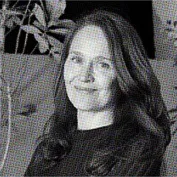
Sarah Pink
Laureate Professor
Director of the FUTURES Hub and the Emerging Technologies Research Lab
Faculty of Art
Design and Architecture
Monash University -

Yoko Akama
Associate Professor
School of Design
RMIT University
Co-lead
Designing Entangled Social Innovation in Asia-Pacific (DESIAP)
Day 1 11/19 Wed.
Method lecture and practiceFushimi, Kyoto
The fieldwork will begin with a lecture on research methods grounded in visual and sensory ethnography by our collaborators Sarah Pink and Yoko Akama, followed by hands-on practice in Fushimi, Kyoto.
View more
Fushimi Ward, Kyoto City
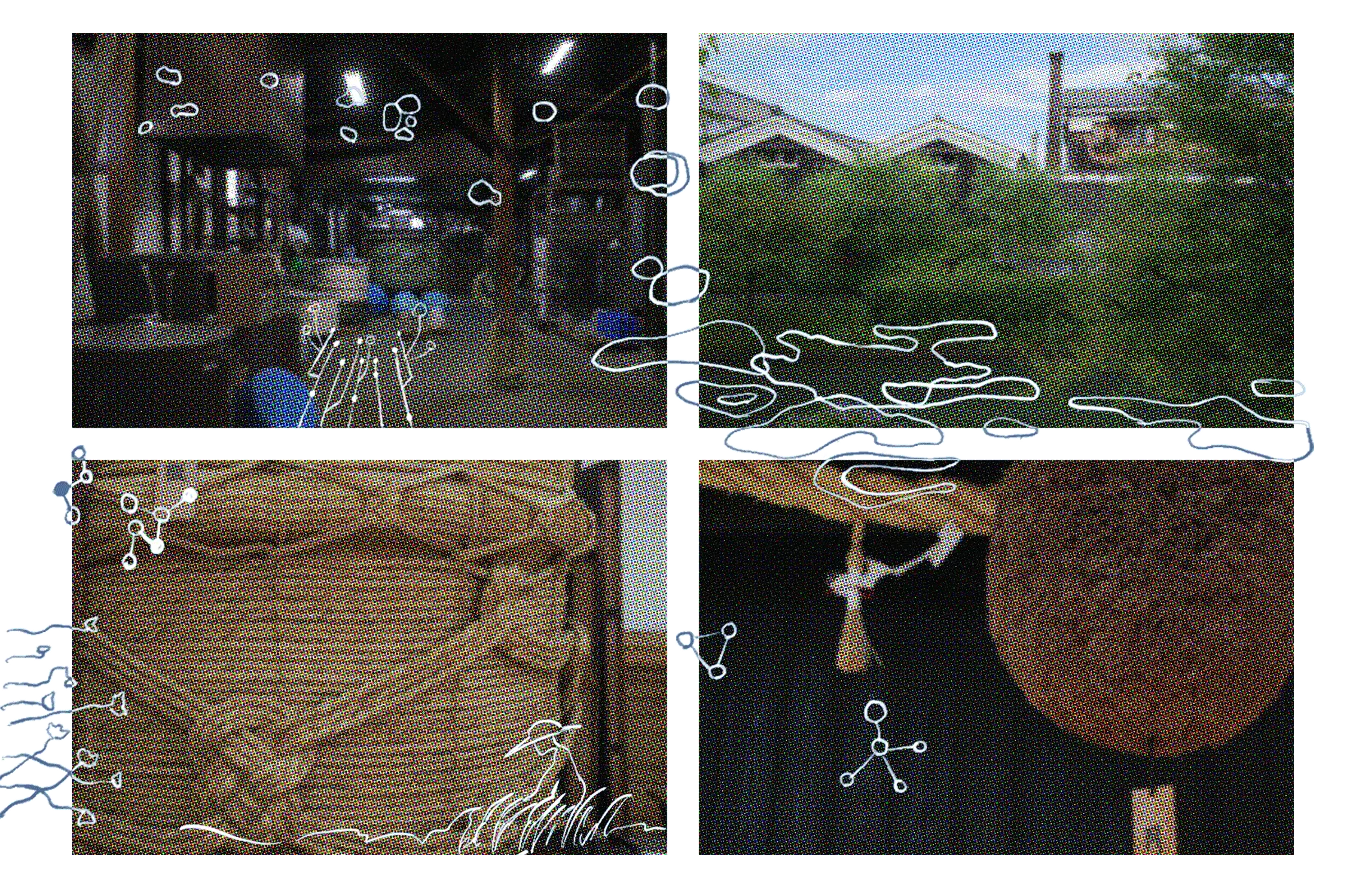
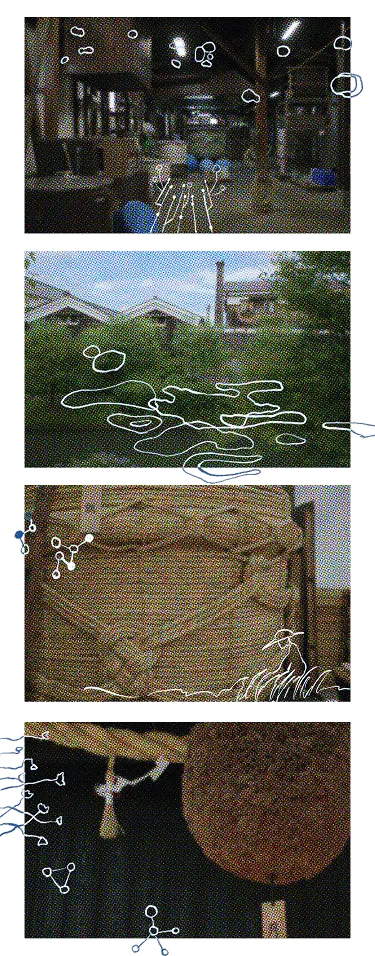
Fushimi has long served as a crossroads of diverse flows of people, thriving as a castle town, port town, and post town. The area also possesses the most substantial groundwater layer within the Kyoto Basin. The interplay of these factors has nurtured local sake production, shaping Fushimi’s distinct identity as a renowned sake region.
During the fieldwork, we will visit Gekkeikan, a sake brewery deeply rooted in this land for over 380 years since its founding in 1637. In the Meiji period, Gekkeikan was among the first to introduce scientific techniques to sake brewing, carefully balancing craftsmanship with modern technology,and played a central role in reshaping the sake industry as Japan’s railway network expanded.
We will encounter Gekkeikan as a dynamic space where the transformations of Fushimi, the intuition of the tōji (master brewers), modern science and technology, as well as non-human actors such as water, yeast, and the divine, all converge with their own temporalities.
Day 2 11/20 Thu.
Immersive fieldworkKameoka, Kyoto / Nagahama, Shiga
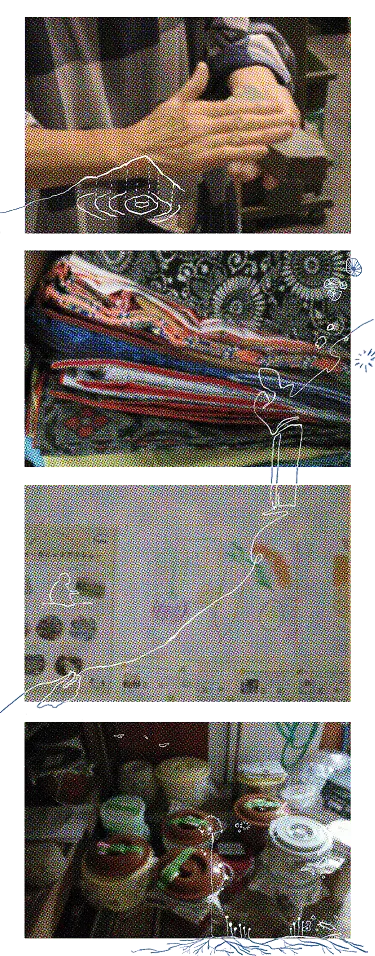
On the second day, the group will divide into two teams, heading to Kameoka City and Nagahama City to put into practice the research methods and attitudes learned the previous day.
View more
Kameoka City, Kyoto Prefecture
From Arashiyama, we will take the scenic trolley to Kameoka and follow the Hozu River upstream—a waterway that, for over 1300 years, has sustained Kameoka’s political, economic, and cultural life as a vital route for timber, vegetables, and people.
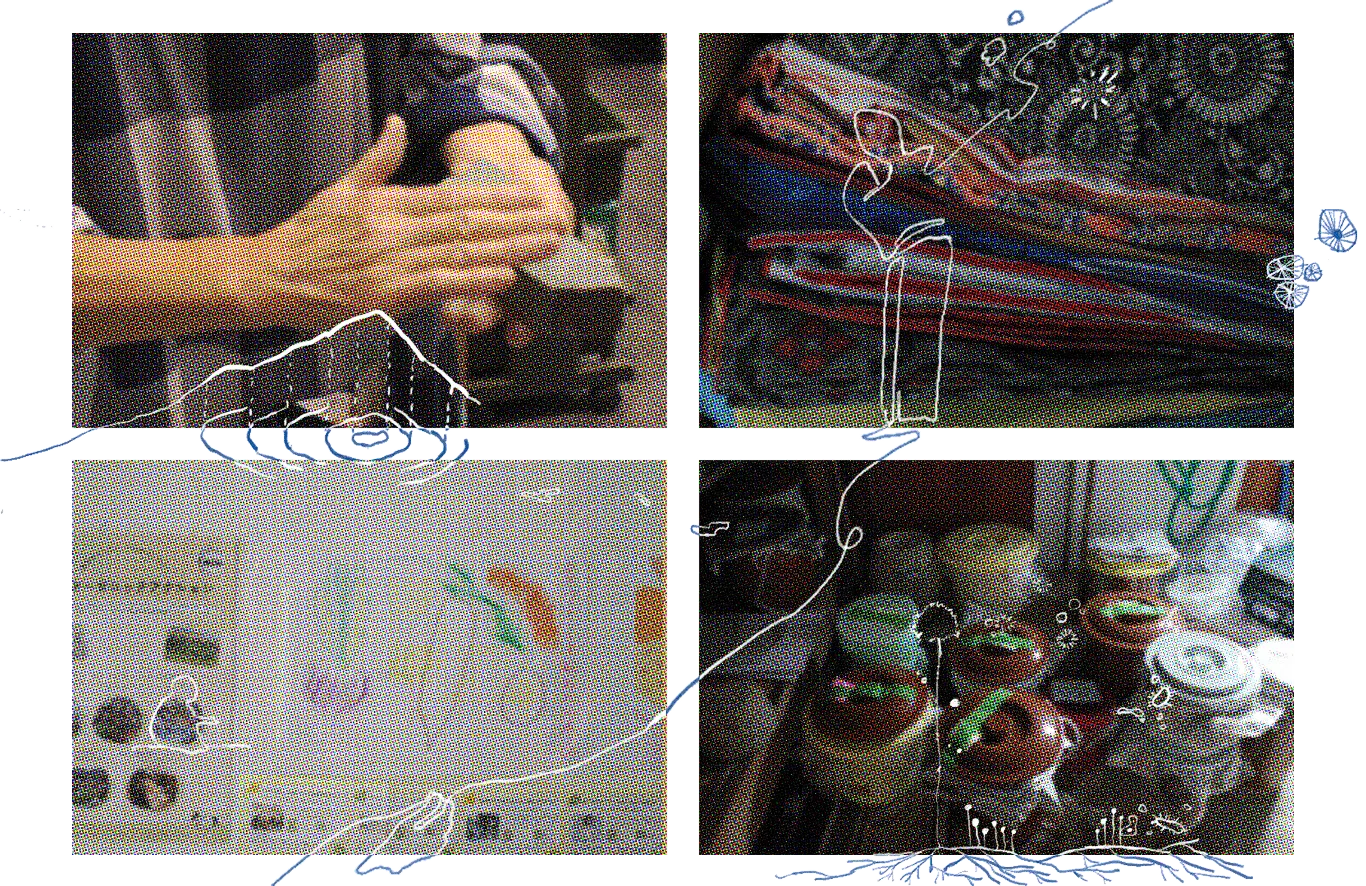
Our first stop is the Natural Whetstone and Hone Museum, where we will turn our attention to the stones that have quietly shaped crafts and livelihoods across Japan, carrying within them 250 million years of geological memory.
In the afternoon, the focus will shift to the contemporary practice of diaper recycling. Here, we will witness how unwanted materials can be handled thoughtfully, rather than simply transported from “here” to “there”.
Along the Hozu River—a majestic infrastructure that has nurtured Kameoka’s practices across time—we will encounter the spirit, techniques, and practical knowledge of circularity, and reflect on how they have been cultivated from the ground up, in flexible and open-ended ways.
Nagahama City, Shiga Prefecture
In the northeast of Lake Biwa, Japan’s largest lake, lies Nagahama. We will begin the day with an early morning walk through Kinomoto, a post town along the Hokkokukaidō Road that once connected Kyoto and Fukui. We will then turn to the stories of Kannon—Buddhist deities whose worship, shaped by the blending of sects gathered around Mount Kodakami, has supported everyday life for over a thousand years.
At midday, we will visit Akatani-sō, a postwar center for women’s independence. In its kitchen, we will learn from the flavors of the land, passed down through countless women’s hands, which have long nourished the local community and its relations to Lake Biwa.
We will also take part in the first steps of transforming kimonos that have long been preserved in Nagahama’s family chests, gently unraveling their threads to give the garments new life. Through these activities, we will attune ourselves to the voices of place, noticing the subtle flows between people and things, and reflecting on the care, time, and politics embedded in these relational practices.
Day 3 11/21 Fri.
Rapid making sessionKYOTO Design Lab (Kyoto City)
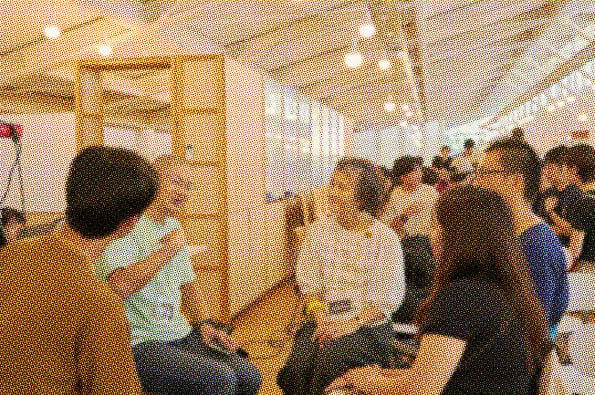
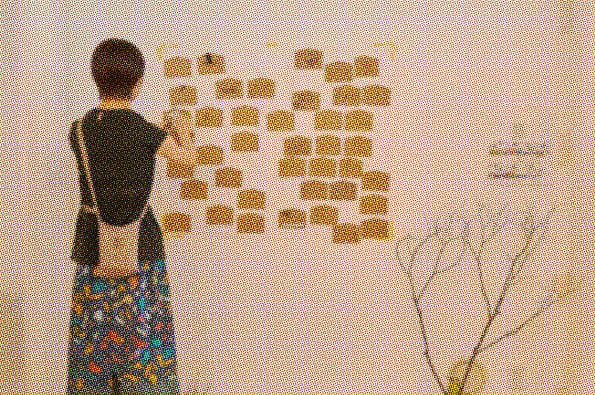
Returning to Kyoto, each group will participate in a collaborative sense-making workshop based on their fieldwork experiences. Using the footage, sounds, words, and objects gathered, participants will be asked to weave the temporalities they experienced into narratives and produce outputs that capture both the insights gained and the ways in which we learned them.
Conference
●Panasonic Design Kyoto (Kyoto)
●2025/11/22 Sat. - 11/23 Sun.
The conference will be a chance for a wider range of practitioners, researchers, government officials, designers, and other relevant stakeholders in and around circular design to come together, and expand on the insights generated through the fieldwork.
By interweaving the findings of fieldwork with theories and case studies brought to the table by the participants, we will work to deepen our understanding of how we might maintain our relationships with the myriad entities that constitute our post-human landscapes, through continued attunement and response to plural temporalities.
Ultimately, we aim to collectively explore and articulate a place-based and relational approach to circular design, grounded in the lands of the Asia-Pacific region.
*The Speaker of Session 1 was updated due to a change in circumstances , 21st NovemberKeynote Speech
●Day 4 11/22 Sat. 10:15-11:15
Taking the insights gained through the fieldwork as a point of reference, Sarah Pink will discuss the theories underpinning her expertise in visual and sensory ethnography, and how these approaches enable us to sense the temporalities embedded in place and collaboratively envision possible futures.
Speaker
-
Sarah Pink
Laureate Professor
Director of the FUTURES Hub and the Emerging Technologies Research Lab
Faculty of Art
Design and Architecture
Monash University
Session 1
Beyond the Modern Sense of Time
●Day 4 11/22 Sat. 11:30-12:45
In modernity, “time” has been understood as homogeneous, clock-measured time flowing linearly from past to future. This linear sense of time is deeply intertwined with the idea of “progress.” Anthropologist Tim Ingold critically observes that, in the Western worldview, the contemporary “Generation Now” conceives of the past as a site of error or ignorance to be rejected or transcended, while positioning the future as a problem to be solved. Within this epistemological frame, progress is defined as the achievement of successive resolutions.
In contrast, in Japanese folklore and in pre-modern societies, one can find very different rhythms of time. The folklorist Tsuneichi Miyamoto portrays the history of village life as a “repetition of failures,” where time unfolds not as a single line of progress but as a continuous process of trial and error. Likewise, Lafcadio Hearn (Koizumi Yakumo) discerned in the world of folktales and popular beliefs—those of the “unseen” and the “unruly”—a deep continuity with the past, and ultimately, a primordial connection with the vital forces of nature. In this session, drawing on such vernacular and more-than-human perspectives, we will revisit the relationship between past and future through the temporal sensibilities embedded in Japanese folklore. By doing so, we hope to open a path toward imagining alternative forms of circularity that move beyond the modern notion of linear progress.
Speaker
updated due to a change in circumstances , 21st November
-
Kei Wakabayashi
Content Director, Independent Researcher
Blkswn Publishers Inc.
Discussants
-
Yoko Akama
Associate Professor
School of Design
RMIT University
Co-lead
Designing Entangled Social Innovation in Asia-Pacific (DESIAP) -
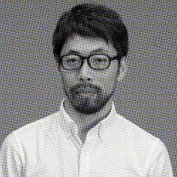
Daijiro Mizuno
Professor
Deputy Director of the Center for the Possible Futures
Kyoto Institute of Technology
Session 2
Methods for Embedding Care and Maintenance in Everyday Infrastructures
●Day 4 11/22 Sat. 14:00-15:30
The word “infrastructure” typically brings to mind physical structures such as roads, railways, ports, power plants, and electricity grids that support logistics and everyday life. However, since the 1990s, discussions in STS (Science and Technology Studies) and participatory design have expanded the understanding of infrastructure to include the complex web of human relationships, institutional frameworks, and social practices that support these functions. The concept of “infrastructuring,” which emerged in the 2010s, views infrastructure not as a completed entity but as a participatory system that continues to evolve through the involvement of diverse stakeholders—including non-human actors.
This session highlights case studies such as "Futsū no Gakkō" ("Ordinary School"), which reimagines schools as infrastructures embedded within the broader ecosystem of a community, and Takenaka Corporation's initiatives that approach existing buildings as part of the landscape, envisioning architecture whose value transforms and even increases over time. Through these examples, the session explores ways for local residents to continuously participate in the emergence and maintenance of infrastructures.
Panelists
-
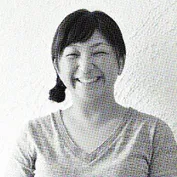
Risa Furukawa
Co-Representative
Niidome School Foundation -

Miki Namba
Lecturer
Global Center
Institute for Comprehensive Education
Faculty of General Education
Kagoshima University -
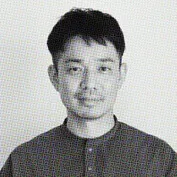
Atsushi Yamazaki
Architect
Takenaka Corporation
Moderator
-

Edward Masui
Senior Director
Re:public Inc.
Session 3
Attuning with/in Spirituality - Relational Practices in Circular Design
●Day 4 11/22 Sat. 16:00-17:30
In efforts toward realizing material circularity, spiritual dimensions are often pushed to the background, with the conversation dominated by technical discussions on how to manage and utilize resources more efficiently. However, solutions premised on the separation of materiality and spirituality risk creating new forms of imbalance and distortion. What happens when we fully embrace the notion that spirituality is essential to maintaining a healthy relation to the world to which we inextricably belong—and take this as a design brief? How might we approach circular design differently? More fundamentally, how can those of us living within the modern frameworks of time and worldview meaningfully engage with spirituality? And how does fudo (climate, place, and cultural environment) function within that relationship?
This session will explore these questions with the insights of Yoko Akama, who advances the concept of “ko-ontology,” a worldview in which spirit, mind, body, soul, and ki (life energy) resonate in mutual presence; entangling humans and nature, visible and invisible, in a state of co-becoming. We will also engage in dialogue with Masafumi Kawachi, who incorporates Jōdo-shū teachings such as memorial and ritual practices into contemporary forms of circular practice, and Kok Yoong Lim, whose research explores the intersection of technology and spirituality in Vietnam from a media perspective.
Panelists
-
Yoko Akama
Associate Professor
School of Design
RMIT University
Co-lead
Designing Entangled Social Innovation in Asia-Pacific (DESIAP) -
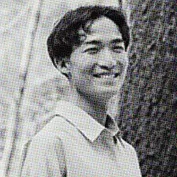
Kawachi Masafumi
Representative Director
Deep Care Lab
Co-Representative
PUBLIC & DESIGN -
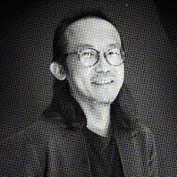
Kok Yoong Lim
Deputy Dean of Research & Innovation
Associate Professor
School of Communication & Design
RMIT University
Session 4
The Timeless Ways of Business in Kyoto
●Day 5 11/23 Sun. 9:30-11:00
In southern Nara, Yoshino has been renowned for over 500 years as a production region for cedar and cypress. Yoshino cedar, in particular, is cultivated through the practice of dense planting and repeated selective thinning in accordance with the trees’ growth, taking more than a century to mature. This process produces wood with fine, even rings and beautifully tight grain, making it indispensable for traditional architecture and highly prized as a material. In this way, wealth has been formed passed down across generations as nariwai (生業) , creating an industrial model that remains deeply rooted in the Kansai region, including Kyoto and Shiga.
Such stock-based economies, however, came to be regarded as outdated in the latter half of the 20th century, replaced by “the wisdom of owning less,” which emphasized flows and became the foundation of business thinking. At the same time, this very trend has often been identified as a main driver of the linear economy, accelerating environmental degradation.
Against the backdrop of accelerated capital circulation through digital technologies, this session will welcome three practitioners who are working to construct and implement new models of stock-based economies—businesses designed to endure over the span of centuries. Together, we will surface both the challenges and possibilities of this endeavor, and explore how such approaches might shape the futures of the circular economy.
Panelists
-

Okisato Nagata
Planning Director
TIMELESS Inc. -
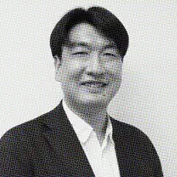
Taiji Okura
Vice President
Gekkeikan Sake Co., Ltd. -
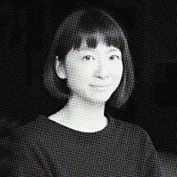
Feilang Tseng
Co-Founder
ROOTS Inc. | Social Design
Moderator
-
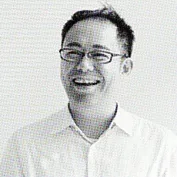
Hiroshi Tamura
Co-Founder
Re:public Inc.
Session 5
Governance and the Possibilities of Human Intervention in Post-Human Fudo
●Day 5 11/23 Sun. 11:15-12:45
Conventional governance has historically centered solely on humans as the basis of institutional systems, treating both natural and artificial entities as objects to be managed or controlled. In post-human landscapes—where the distinction between “culture” and “nature” has dissolved and humans are embedded within relational networks—governance must shift from asking “who governs what” to asking “who and what can be mutually attuned, and in what ways.” Facilitating the ongoing engagement and consensus-building of diverse actors thus requires dynamic institutional designs capable of continual adjustment, negotiating with unpredictable events and entities, and responding adaptively to occurrences that may initially appear as errors or deviations.
This session examines two illustrative initiatives. In Kameoka City, Masayuki Terai has revitalized the technical cycle of waste through a hybrid of bottom-up and top-down approaches, cultivating creative relationships with waste via the “Gomi no Gakko (School of Waste).” In Onahama, Iwaki City, Fukushima, Riken Komatsu explores the role of the outsider as a “co-subject,” attentively engaging with stakeholders’ voices, while encouraging outsiders to recognize and engage with the slivers of firsthand experience that reside within themselves. Together, these cases shed light on how humans can intervene in post-human landscapes and on the role that legal and institutional frameworks may play in facilitating such engagement.
Panelists
-

Tatsuhiko Inatani
Professor
Graduate School of Law
Kyoto University -
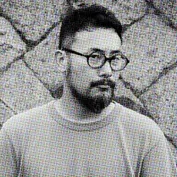
Riken Komatsu
Local Activist
Writer -
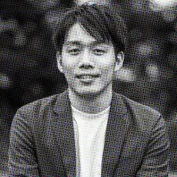
Masayuki Terai
CEO
Gomi no Gakko Inc.
Moderator
-
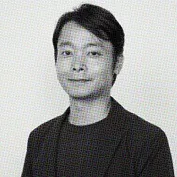
Tomohide Mizuuchi
Associate Professor
Center for the Possible Futures
Kyoto Institute of Technology
Session 6
Talk & Interactive Dialogue – “Futures of Fudo / Fudo of the Future”
●Day 5 11/23 Sun. 13:30-15:30
This year’s Circular Design Week explores the relationship between fudo and humanity through the lens of “infrastructuring”—a mode of human intervention rooted in ongoing care and maintenance. At the same time, as evidenced in the framing of this year’s fieldwork and the themes of other sessions, fudo is not something that exists solely for human beings. Rather, it is a plural and generative field that is open to all entities—plants, animals, microorganisms, objects, machines, and artificial intelligence.
In this session, we will deepen our exploration of “post-human fudo,” moving beyond the reductionist and homogenizing worldview of modernity. Through a participatory workshop, participants will collaboratively explore possible configurations of “Futures of Fudo / Fudo of the Future.” Together, we will rethink circular design from the perspective of care and coexistence, attending to the relational entanglements between human and non-human, material and immaterial, visible and invisible.
Speaker
-
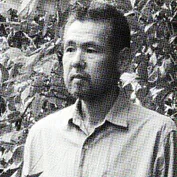
Masahiro Terada
Visiting Professor
Research Insitute for Humanity and Nature
Kyoto
Japan
Discussants
-
Yoko Akama
Associate Professor
School of Design
RMIT University
Co-lead
Designing Entangled Social Innovation in Asia-Pacific (DESIAP) -
Daijiro Mizuno
Professor
Deputy Director of the Center for the Possible Futures
Kyoto Institute of Technology


Fieldwork
The fieldwork is primarily designed for CDW25 supporters and invited global and domestic experts (speakers at the conference). However, this year a limited number of individual participation slots are also available.
If you are a corporate interested in supporting the event, or an individual researcher/ practitioner working in and around circular design and would like to participate, please contact us via the form linked below.
Conference
The conference is open to all. If you would like to participate, please register for a ticket through the Peatix page linked below.


CDW25 invites companies interested in exploring and pursuing circular design to join as program supporters.Supporting companies will have unique opportunities to engage with circular design initiatives and expand their professional networks. Benefits include participation in fieldwork, the conference, and networking sessions, access to conference video archives, and invitations to special after-sessions in Tokyo.
If you are a corporate interested in supporting the event, please reach out via the form linked below, and select “Regarding program sponsorship / 協賛・サポーター企業募集について.” We will follow up promptly with detailed information about the program and supporter packages.

Meaningful Networking
Across
the Asia-Pacific
Each year, CDW brings together over 100 diverse practitioners, researchers, entrepreneurs, and government representatives, primarily from the Asia-Pacific region. Its defining feature is the depth of interaction made possible by its intimate scale. Through discussions, informal networking opportunities, and hands-on fieldwork, CDW brings together people from diverse backgrounds, fostering genuine dialogue and meaningful connections.

Nurturing Skills to Think
Across
Sectors and Themes
CDW provides a rare opportunity to engage not only with global trends but also with locally rooted practices, experimental initiatives, and perspectives often overlooked in conventional circular economy discussions. The program is designed to help participants to grapple with complex, multilayered questions surrounding circular design, while creating opportunities for participants to gain alternative perspectives beyond their own fields and professional domains.

Laying the Groundwork
for Practical Action
More than a place for acquiring knowledge, CDW cultivates the conditions that enable participants to transform learning into action. For example, CDW23 catalyzed place-based innovation projects involving local leading companies, designers, and researchers in Kagoshima. CDW sows the “seeds” of cross-sector collaboration and fosters an environment in which they can grow and thrive.


Main organizer

Circular Design Praxis (CDP) is a coalition of academic institutions, businesses, and communities for fostering and implementing a place-based approach to circular design predicated on systemic change, launched in Japan in 2022. CDP recognizes the abundance of the lands as a starting point, and cultivates a place of praxis for local collectives of diverse peoples, backgrounds and expertise.

Re:public was founded in 2013 as a 'think and do tank' to catalyze systemic shifts in local communities, organizations, and cities of different scales. Combined with our global network of creative designers and researchers, we are uniquely positioned to identify place-based opportunities, help individuals and communities to work with these opportunities, and empower them to envision and create their own futures.
Co-organizer

KYOTO Design Lab [D-lab] is a platform for collaborations, founded by Kyoto Institute of Technology as a cross-disciplinary education and research base in the fields of architecture and design. Since its inauguration in 2014, D-lab holds the mission of “Innovation by Design” and plays a role of incubator where various areas of expertise come together to discover and solve social problems through ground work research.
Supporters






Conference venue provided by


AI simultaneous interpretation
provided by




For inquiries regarding event sponsorship, media coverage or press, as well as any other questions or consultations, please contact us via the form linked below.
Sarah Pink
Laureate Professor / Director of the FUTURES Hub and the Emerging Technologies Research Lab, Faculty of Art, Design and Architecture, Monash University
Sarah Pink (PhD, PhD hc x2, FASSA) is an award winning futures anthropologist, methods innovator and documentary filmmaker. Sarah is Laureate Professor and Director of the Emerging Technologies Research Lab and FUTURES Hub at Monash University. Prior to this she was RMIT Distinguished Professor and Director of the Digital Ethnography Centre at RMIT University. Sarah has published widely in the field of qualitative inquiry, including her Doing Visual Ethnography (2021, 4th edition), Doing Sensory Ethnography (2015 2nd edition) and the co-authored Digital Ethnography (2016) and Design Ethnography (2022). Her recent documentaries include Smart Homes for Seniors (2021) and Digital Energy Futures (2022).
Yoko Akama
Associate Professor, School of Design, RMIT University
Co-lead, Designing Entangled Social Innovation in Asia-Pacific (DESIAP)
Yoko Akama is a design researcher and educator in the School of Design, RMIT University, Naarm (now Melbourne, Australia). Designing for her is a way to enhance qualities of inter-relating, by respecting difference and accommodating diversity. Yoko brings this practice to research, teaching and gatherings, where she has collaborated with various groups across Australia and Asia, to address various entrenched issues and self-determine shared futures. These range from enabling adaptive capacities for regional communities prepare for natural disasters; supporting Indigenous sovereignty and nation building; scaffolding transcultural mentorship for women in creative sectors; and guiding structures for ethical gathering. Yoko is also the co-founder and co-leader of the Designing Entangled Social Innovation in Asia-Pacific learning platform (www.desiap.org).
Sarah Pink
Laureate Professor / Director of the FUTURES Hub and the Emerging Technologies Research Lab, Faculty of Art, Design and Architecture, Monash University
Sarah Pink (PhD, PhD hc x2, FASSA) is an award winning futures anthropologist, methods innovator and documentary filmmaker. Sarah is Laureate Professor and Director of the Emerging Technologies Research Lab and FUTURES Hub at Monash University. Prior to this she was RMIT Distinguished Professor and Director of the Digital Ethnography Centre at RMIT University. Sarah has published widely in the field of qualitative inquiry, including her Doing Visual Ethnography (2021, 4th edition), Doing Sensory Ethnography (2015 2nd edition) and the co-authored Digital Ethnography (2016) and Design Ethnography (2022). Her recent documentaries include Smart Homes for Seniors (2021) and Digital Energy Futures (2022).
Kei Wakabayashi
Content Director / Independent Researcher, Blkswn Publishers Inc.
After working in the editorial department of Gekkan Taiyō at Heibonsha, Wakabayashi became a freelance editor in 2000. Since then, he has edited a wide range of magazines, books, and exhibition catalogues. He is also active as a music journalist. In 2012, he became Editor-in-Chief of the Japanese edition of WIRED, a position he held until 2017. In 2018, he founded the creative studio blkswn publishers Inc.His publications include Weekly Daen Mondo: The Labyrinth of COVID-19* (blkswn publishers, December 2020) and Goodbye, Future: Editor's Chronicle 2010–2017 (Iwanami Shoten, April 2018), as well as serving as supervising editor for Next-Generation Government: How to Build a Small yet Large Government. He is also known for developing and producing various podcasts, including Hello, Future, Anthropology of Work, blkswn jukebox, and Ondoku Black Swan.
Yoko Akama
Associate Professor, School of Design, RMIT University
Co-lead, Designing Entangled Social Innovation in Asia-Pacific (DESIAP)
Yoko Akama is a design researcher and educator in the School of Design, RMIT University, Naarm (now Melbourne, Australia). Designing for her is a way to enhance qualities of inter-relating, by respecting difference and accommodating diversity. Yoko brings this practice to research, teaching and gatherings, where she has collaborated with various groups across Australia and Asia, to address various entrenched issues and self-determine shared futures. These range from enabling adaptive capacities for regional communities prepare for natural disasters; supporting Indigenous sovereignty and nation building; scaffolding transcultural mentorship for women in creative sectors; and guiding structures for ethical gathering. Yoko is also the co-founder and co-leader of the Designing Entangled Social Innovation in Asia-Pacific learning platform (www.desiap.org).
Daijiro Mizuno
Professor / Deputy Director of the Center for the Possible Futures, Kyoto Institute of Technology
Daijiro Mizuno completed his Ph.D. in fashion design at the Royal College of Art (London), in 2008. From 2009 to 2013, he worked as Director of Ultra Factory Critical Design Lab at the Kyoto University of Art and Design; it was around this time where he began actively exploring the field of slow, ethical, or sustainable fashion. Eventually, this experience will develop into research on design practices with a focus on digital fabrication. From 2012 to 2019, Mizuno has also worked as Associate Professor at Keio University SFC. He has written and translated several books including “Circular Design: Products, Services and Businesses that Create a Sustainable Society” and the Japanese version of "Critical Design in Context: History, Theory, and Practice" by Matt Malpass. In 2021, he worked as Chairperson of the ”Future of Fashion Study Group” by the Ministry of Economy, Trade and Industry.
Risa Furukawa
Co-Representative, Niidome School Foundation
Born in Kagoshima Prefecture. Representative of Hiyori Nursery School, Solanomachi Nursery School, and Hinatayama Muku Shokudo, a restaurant and local specialty shop. With over 20 years of experience teaching Japanese in South Korea, China, and Japan, she has been involved in both teaching and curriculum development, and has taught more than 2,000 students from 22 countries.Currently working to establish a private elementary school in Aira City, Kagoshima.Author of "Welcome to Hiyori Shokudo," winner of the Good Design Award Gold Prize, the Minister of Economy, Trade and Industry Award, and the Grand Prix (Child category) at the Gourmand World Cookbook Awards.
Miki Namba
Lecturer, Global Center, Institute for Comprehensive Education, Faculty of General Education, Kagoshima University
A cultural anthropologist whose research explores the relationship between imagination and materiality, with a focus on infrastructure in Laos. Her work spans from large-scale infrastructure projects driven by development aid to the study of folk engineering techniques and water management infrastructure in the Anthropocene. Notable publications and translations include “Material Itineraries of Electric Tuk-tuks: The Challenges of Green Urban Development in Laos,” (in EASTS 15 (2), 2021), Ana Tsing's Friction (co-translated into Japanese, Suiseisha, 2021), and “Becoming a City: Infrastructural Fetishism and Scattered Urbanization in Vientiane, Laos” (in Harvey, Jensen, and Morita, Infrastructures and Social Complexity, Routledge, 2017).
Atsushi Yamazaki
Architect, Takenaka Corporation
Born in Izumo City, Shimane Prefecture in 1982, raised in Nishinomiya City, Hyogo Prefecture. Graduated from Kobe University Faculty of Engineering, Department of Architecture in 2005. Completed Master's degree at Kobe University Graduate School of Science and Technology in 2007. Joined Takenaka Corporation Design Department in 2007. First-class registered architect. Gained various experiences in nature from an early age through Boy Scouts. Following the interruption of numerous projects due to the COVID-19 pandemic in 2020, he began working on regenerative architectural design by connecting his experiences in nature with his architectural philosophy. Representative works: Osaka Hiraishin Kogyo Kobe Office, 2025Osaka-Kansai Expo "Foresting Architecture"
Edward Masui
Senior Director, Re:public Inc.
Edward received his BA in philosophy from the University of California, Berkeley, and his MA from the Master of Arts Program in the Social Sciences (MAPSS) at the University of Chicago. After returning to Japan in 2010, Edward was part of the launching of Japan Digital Archives Center, while acting as an international liaison between the library sector in Japan and those around the world for the Japan Library Fair Organizing Committee. He also took lead in several company-wide projects, including but not limited to, re-branding and business incubation projects. Edward’s focus is on designing learning environments that are conducive to collaborative making (things, events, social systems, etc.) activities, with an emphasis on digital fabrication technologies. He completed the Creative Leadership Program at Tama Art University in 2020, and joined Re:public Inc. in 2021.
Yoko Akama
Associate Professor, School of Design, RMIT University
Co-lead, Designing Entangled Social Innovation in Asia-Pacific (DESIAP)
Yoko Akama is a design researcher and educator in the School of Design, RMIT University, Naarm (now Melbourne, Australia). Designing for her is a way to enhance qualities of inter-relating, by respecting difference and accommodating diversity. Yoko brings this practice to research, teaching and gatherings, where she has collaborated with various groups across Australia and Asia, to address various entrenched issues and self-determine shared futures. These range from enabling adaptive capacities for regional communities prepare for natural disasters; supporting Indigenous sovereignty and nation building; scaffolding transcultural mentorship for women in creative sectors; and guiding structures for ethical gathering. Yoko is also the co-founder and co-leader of the Designing Entangled Social Innovation in Asia-Pacific learning platform (www.desiap.org).
Kawachi Masafumi
Representative Director, Deep Care Lab / Co-Representative, PUBLIC & DESIGN
Kawachi Masafumi graduated from the Master’s Program in CoDesign at Aalto University. After researching social innovation and public sector collaboration in Finland, he now works at the intersection of ecology, anthropology, and futures ethics, focusing on social implementation practices rooted in mutual care that span from nature and non-human beings to ancestors and future generations. His publications include the essay Designing and Caring with Multispecies (Shisō, October 2022) and the co-authored book Creative Democracy (BNN Inc.). Kawachi currently serves as Program Director at Oten-in Temple, has been pursuing a hunting license for the past three years, and is also an apprentice yamabushi (mountain ascetic practitioner).
Kok Yoong Lim
Deputy Dean of Research & Innovation / Associate Professor, School of Communication & Design, RMIT University
Kok Yoong Lim, Associate Professor of Digital Media at RMIT Vietnam’s School of Communication & Design, with 16+ years of experience in creative multimedia as a researcher, teacher, and practitioner. His art+tech+philosophical work is probing the shifting conditions of existence, presence, and aesthetics in the Cybrid landscape. Lim’s research-led practice manipulates perception to probe new space–time consciousness shaped by technology, most recently through his projects Digital Spirituality, Environmental Entanglements, and Wellbeing in Anthropocene, developing a framework of post-virtual geophilia, positioning technology as existential media. He proposes an expanded existential condition where autopoietic systems and distributed agencies create multisensory ecologies that renew our spiritual connections to the environment in the Anthropocene. His work has travelled across Southeast Asia, Korea, Japan, and the UK, with recent showcases at the National Taiwan Museum of Fine Arts, Science Gallery Bengaluru, and Museum of Modern and Contemporary Art in Nusantara. Visit limkokyoong.com for more.
Okisato Nagata
Planning Director, TIMELESS Inc.
Nagata Okisato began his career in museums and design firms before founding TIMELESS. Drawing on deep ties to local industries and crafts, as well as an extensive professional network, Nagata works across diverse fields including product development, launching facilities and stores, and training artisans. He also founded platforms that connect makers and audiences, including Tetete Business Meeting and NEIGHBORS FOOD MARKET, and has been involved in major initiatives such as Japan’s largest design event Designart and the maritime architecture venture N-ARK. More recently, Nagata has been exploring craft as a lens for understanding human values and sensibilities in his writing.
Taiji Okura
Vice President, Gekkeikan Sake Co., Ltd.
After receiving bachelor’s in Economics from Kyoto University, he began his career at Mizuho Bank, handling corporate banking for small and medium-sized enterprises, and later moved to Mizuho Securities, focusing on investment banking in the consumer retail sector.
After joining Gekkeikan Sake, his family business, he served as co-head of Marketing before assuming his current role as vice president, overseeing overall corporate management.
He has led key initiatives such as the rebranding of Horin, Gekkeikan’s flagship line; the launch of Gekkeikan Studio, an innovative project that highlights science-driven sake brewing; and the creation of Jikkoku, a new local sake brand from Gekkeikan’s subsidiary Matsuyama Shuzo.
Feilang Tseng
Co-Founder, ROOTS Inc. | Social Design
Studied Industrial Design in San Francisco with a focus on Human-Centered Design.Returned to Japan to join Omron Healthcare, managing the total design process for healthcare devices—including product design, UI, and UX experience design—and received both the iF Gold Award and the Good Design BEST100.Began working as a freelance designer in 2017 and served as a part-time lecturer in Social Design at Kyoto City University of Arts. Moved to Keihoku, Kyoto, and, after beginning life in a 250-year-old thatched-roof farmhouse, co-founded ROOTS Inc. in 2018. Developed sustainable design training programs for International students to learn Nature-Centered Design—a regenerative approach rooted in natural cycles—through hands-on, travel-based regional design experiences.
Hiroshi Tamura
Co-Founder, Re:public Inc.
Hiroshi Tamura was born in Kanagawa Prefecture and graduated from the University of Tokyo with a degree in Psychology, completing coursework toward a PhD in Interdisciplinary Information Studies. He joined Hakuhodo Inc. in 1994, working in digital media research and business development before serving as Senior Researcher at the company’s Innovation Lab. In 2013, he left to establish Re:Public Inc.
In 2009, together with Professor Hideyuki Horii, he co-founded the University of Tokyo’s i.school, an interdisciplinary program for developing innovation leaders, and became an Executive Fellow in 2013. He currently holds visiting professorships at Kyushu University and the Japan Advanced Institute of Science and Technology (JAIST). His publications include The University of Tokyo Method: Creating Innovations that Change the World (2010, Hayakawa Publishing), among others.
Tatsuhiko Inatani
Professor, Graduate School of Law, Kyoto University
Tatsuhiko Inatani is a professor at Kyoto University Graduate School of Law. He specializes in digital law and criminal justice. In particular, his research focuses on the legal governance of advanced science and technology and corporate crime. He employs an interdisciplinary research methodology, applying knowledge from adjacent fields such as neurocognitive science, economics,anthropology, and contemporary philosophy. He is also the PI of the research team on Artificial Intelligence and Law at the Center for Interdisciplinary Studies on Law and Policy, Kyoto University. He is also a visiting researcher at RIKEN AIP. He has served on various committees of the Cabinet Secretariat, METI,Digital Agency, IPA-DADC, and WEF. He has also conducted joint research with several companies and with several international research institutions.
Riken Komatsu
Local Activist, Writer
Riken Komatsu was born in Onahama, Iwaki City,Fukushima Prefecture. After working as a journalist, Japanese language teacher, and PR officer for a kamaboko manufacturer, he became independent in 2015. Alongside running an alternative space in his local shopping district, he has developed the concept of “co-subject,” which spreads the sense of agency and responsibility of stakeholders in social issues, and engages in a wide range of community and writing activities across healthcare, welfare, food, and cultural arts. His book Shin Fukko-ron won the 18th Osaragi Jiro Forum Prize, and his community-based integrated care initiative igoku in Iwaki received the Good Design Gold Award.
Masayuki Terai
CEO, Gomi no Gakko Inc.
Masayuki Terai is CEO of Gomi no Gakko Inc. Focusing on building a circular society, Terai leads waste-to-resource projects and circular economy training programs in collaboration with companies and local governments. From research and pilot initiatives to full-scale implementation, he provides end-to-end support, promoting the development of sustainable business models. By bridging practical operations and strategic planning, he helps a wide range of industries advance environmentally positive practices.
Tomohide Mizuuchi
Associate Professor, Center for the Possible Futures, Kyoto Institute of Technology
Tomohide Mizuuchi studied foundational design at Musashino Art University and Meta-Design at Goldsmiths, University of London (MA in Design Futures), and earned his PhD from Kyoto Institute of Technology. After working at English and Japanese based creative agencies and serving as Associate Professor at Nagoya University of Arts, he now pursues a practice of design that responds thoughtfully to the entangled realities of our world, through research and practical projects in social innovation and systemic design. His international workshops include FoodScope (Forum Design Paris 2018), and his publications include Design for Plural Worlds (co-editor and translator).
Masahiro Terada
Visiting Professor, Research Insitute for Humanity and Nature, Kyoto, Japan
Masahiro Terada investigates what is the basic principle of nature and environment and how are they perceived, thought, and narrated. He is a visiting professor at Research Institute for Humanity and Nature, Kyoto, Japan, and was a visiting scholar at MaxPlanck Institute for the History of Science, Berlin, Germany, and a visiting researcher at National Museum of Japanese History, Chiba, Japan. His publications include Future Fudo (ed., Kyoto: Kyoto University Press, 2025), Fudo in the Anthropocene (Kyoto: Showado, 2023), and Anthropocene in Asia (eds. with Daniel Niles, Kyoto: Kyoto University Press, 2021) (all in Japanese).
Yoko Akama
Associate Professor, School of Design, RMIT University
Co-lead, Designing Entangled Social Innovation in Asia-Pacific (DESIAP)
Yoko Akama is a design researcher and educator in the School of Design, RMIT University, Naarm (now Melbourne, Australia). Designing for her is a way to enhance qualities of inter-relating, by respecting difference and accommodating diversity. Yoko brings this practice to research, teaching and gatherings, where she has collaborated with various groups across Australia and Asia, to address various entrenched issues and self-determine shared futures. These range from enabling adaptive capacities for regional communities prepare for natural disasters; supporting Indigenous sovereignty and nation building; scaffolding transcultural mentorship for women in creative sectors; and guiding structures for ethical gathering. Yoko is also the co-founder and co-leader of the Designing Entangled Social Innovation in Asia-Pacific learning platform (www.desiap.org).
Daijiro Mizuno
Professor / Deputy Director of the Center for the Possible Futures, Kyoto Institute of Technology
Daijiro Mizuno completed his Ph.D. in fashion design at the Royal College of Art (London), in 2008. From 2009 to 2013, he worked as Director of Ultra Factory Critical Design Lab at the Kyoto University of Art and Design; it was around this time where he began actively exploring the field of slow, ethical, or sustainable fashion. Eventually, this experience will develop into research on design practices with a focus on digital fabrication. From 2012 to 2019, Mizuno has also worked as Associate Professor at Keio University SFC. He has written and translated several books including “Circular Design: Products, Services and Businesses that Create a Sustainable Society” and the Japanese version of "Critical Design in Context: History, Theory, and Practice" by Matt Malpass. In 2021, he worked as Chairperson of the ”Future of Fashion Study Group” by the Ministry of Economy, Trade and Industry.