

Co-creating transition imaginaries for sustainable circular futures from the lands of Asia Pacific.
Circular Design Week (CDW) is a platform that explores the possibility of placed-based circular designs that are enacted in, and emerge out of, the traditions, daily practices, and complex relationalities unique to the Asia-Pacific region.
With a strong emphasis on local contexts and learning via firsthand experience, we strive to get a better understanding of the plurality, as well as the autonomous and distributive nature of sustainable societies.
CDW26
Program Overview
CDW26 is an exploratory program that combines an immersive fieldwork in the Mekong Delta with a thought-provoking conference in Ho Chi Minh City. Joining the entire journey as exploration partners are fermentation designer Hiraku Ogura and participatory design expert Yoko Akama. Together with researchers, designers, and practitioners from Vietnam, Japan and other parts of the world, we will dive deep into the future of "circular design" emerging from the Asia-Pacific region.
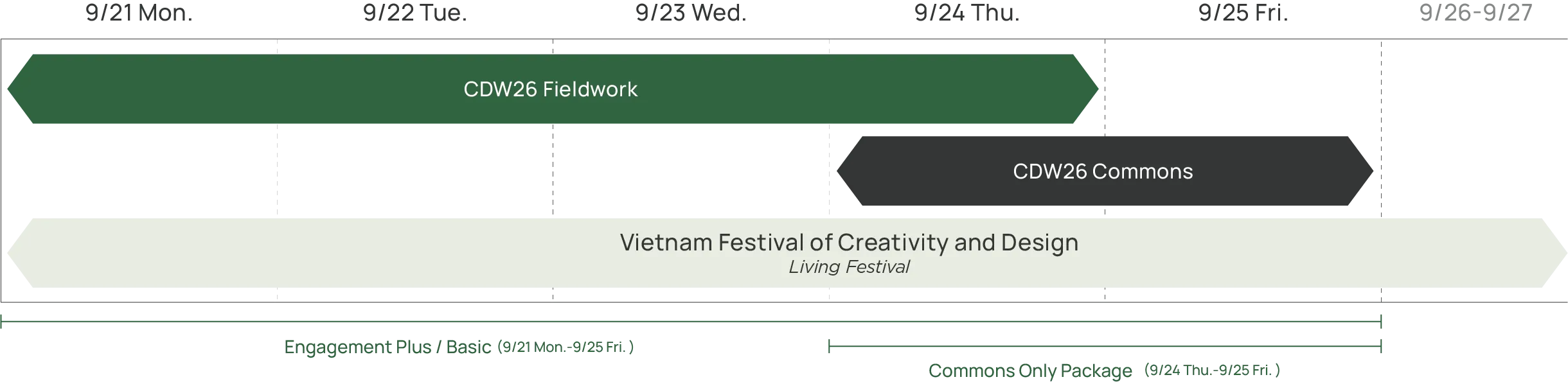
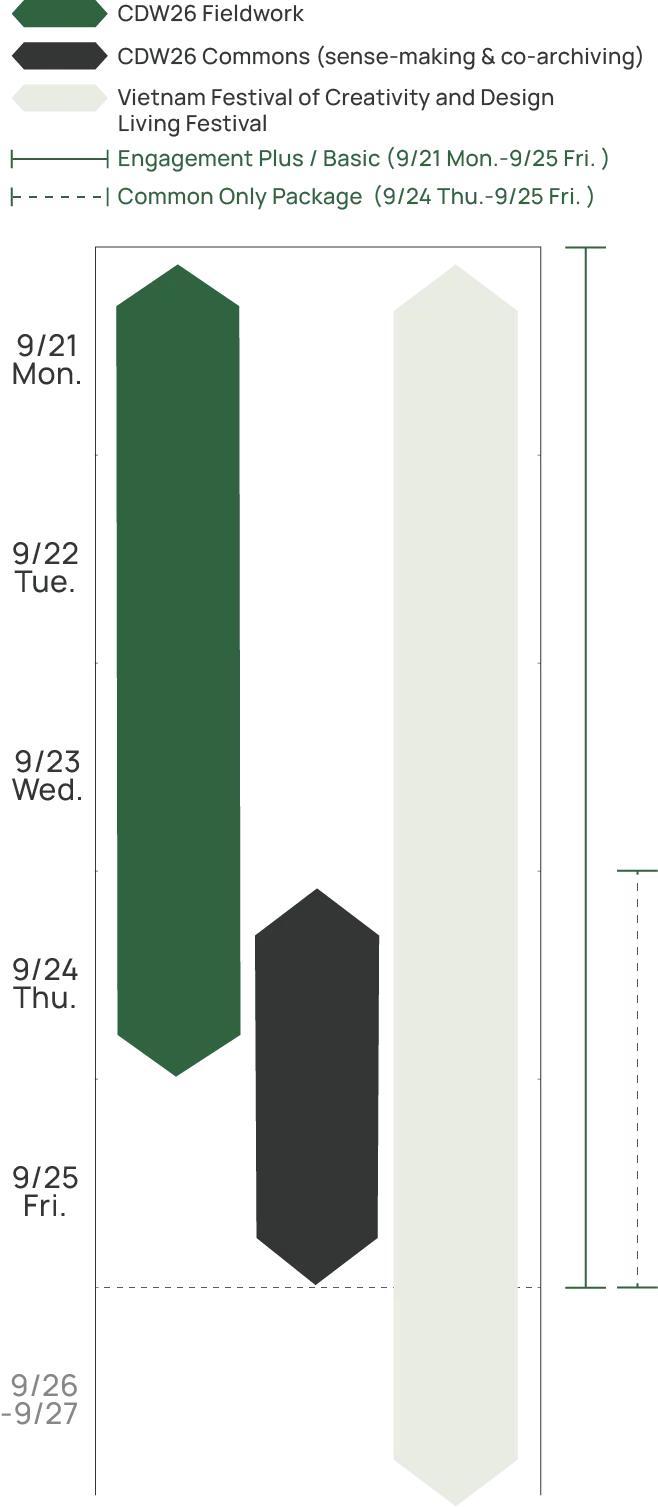
This year, the program will be hosted as one of the tracks at the Vietnam Festival of Creativity and Design (VFCD), one of Vietnam's largest design festivals.
Fieldwork
Mekong Delta
September 21 (Mon) – 24 (Thu)
Commons
(co-archiving + sense-making)
Nina Next Space, Ho Chi Minh City
September 24 (Thu) – 25 (Fri)
Exploration Partners
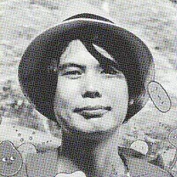
Hiraku Ogura
Fermentation Designer
CEO, Fermentation Design Lab. LtdAiming to make the invisible work of fermentation microbes visible through design, Hiraku leads fermentation- and microbiology-focused projects with brewers and researchers across Japan. After studying fermentation science at Tokyo University of Agriculture, he established a fermentation lab in the mountains of Yamanashi, where he cultivates microbes and explores their worlds. In 2020, he opened Hakkō Department in Shimokitazawa. His books include widely acclaimed Fermentation Cultural Anthropology and A Journey Through Asian Fermentation, and his latest How We Live with Tradition. He also hosts the YBS Radio program Fermentation Siblings' COZY TALK and the podcast #Tadaima Hakkōchū.

Yoko Akama
Associate Professor / School of Design, RMIT University
Co-lead / Designing Entangled Social Innovation in Asia-Pacific (DESIAP)Yoko Akama is a design researcher and educator in the School of Design, RMIT University, Naarm (now Melbourne, Australia). Designing for her is a way to enhance qualities of inter-relating, by respecting dierence and accommodating diversity. Yoko brings this practice to research, teaching and gatherings, where she has collaborated with various groups across Australia and Asia, to address various entrenched issues and self-determine shared futures. These range from enabling adaptive capacities for regional communities prepare for natural disasters; supporting Indigenous sovereignty and nation building; scaolding transcultural mentorship for women in creative sectors; and guiding structures for ethical gathering. Yoko is also the co-founder and co-leader of the Designing Entangled Social Innovation in Asia-Pacific learning platform.
Theme of CDW26
Metabolic
Abundance
Metabolic Abundance frames circularity as a living condition – the ongoing process through which life is sustained, exchanged, and returned across ecology, culture, infrastructure, and everyday practice.
The Mekong Delta is not a metaphor for this condition. It is this condition. Alluvial sediment, brackish water, floating rice, fermented fish paste, tidal rhythms, canal politics, salt damage, and Khmer rituals are all metabolic processes. They do not require circular design to be circular; they already are.
But this abundance is not stable or given. It is continuously produced through a tension between two orientations that run through every canal, every sluice gate, every hybrid rice variety: Thuận thiên – living in accordance with the flood, adapting as a form of intelligence – andkiểm soát – controlling, optimising, extracting. Most circular design discourse operates in the register of kiểm soát. The Mekong Delta is a site where Thuận has been practised for centuries, and where the conflict between these two orientations is currently visible, embodied, and at risk.
CDW 2026 asks what circular design can learn from this place – not only what it might bring to it.
Two Routes, Two Angles to Sense-Feel the Mekong Delta
The Mekong Delta sits at the southern tip of Vietnam, where the river breaks into nine tributaries before reaching the sea. It moves. Tides shift the riverbanks overnight. Sediment from somewhere upstream quietly rewrites the estuary floor. Rain decides what is farmland this season. Rivers here are not boundaries but connective tissue, linking farms to markets, craft traditions to ports, and the domestic to the industrial.
The Delta is also mid-transition. Climate change, salinity intrusion, land subsidence, and new infrastructure are reshuing how people live and work. Planning agendas now reach beyond rice production into aquaculture, logistics, fruit cultivation, and climate adaptation. Things circulate here without waiting for design frameworks.
For CDW 2026, the Delta maers not simply as a vulnerable landscape but as a living laboratory for the Asia-Pacific.
For CDW 2026, participants will explore this continuously transforming landscape through two distinct routes across the Mekong Delta. One route follows the upstream freshwater zones, where communities have learned to live with seasonal floods; the other traces the downstream brackish and saline areas, where people are adapting to increasing saltwater intrusion.
Route 1
Thuận thiên
Go with the flow of the heavens / Upstream · Freshwater zone
Route 1 follows the upstream / freshwater axis where floods continue to be a gift, where floating rice and amphibious living are intact practices.
Route 2
Con nước
Reading the Water / Downstream · Brackish to saline zones
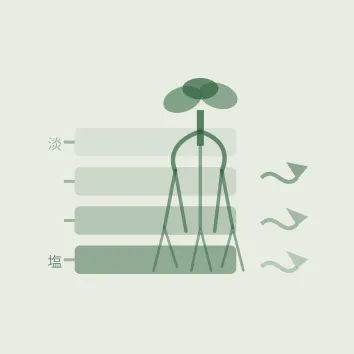
Route 2 follows the downstream / brackish-to-salt axis where communities are actively renegotiating survival under salinity intrusion, where the transition between water states is a daily, material pressure.
Participation
Packages

Engagement Plus
(Corporate Package)Designed for companies seeking active involvement, this package offers opportunities to deliver corporate presentations and join social dinners to deepen connections with key stakeholders. The plan includes participation for up to three people in the Fieldwork and Commons. For further details, please contact us via the google form.

Basic Package
(Individual Package)Designed for individuals looking to experience the local energy firsthand and immerse themselves in the environment. The plan includes participation for one person in the Fieldwork and Commons. For further details, please contact us via the google form.

Commons
Only PackageA condensed 2-day option for the latter half of the program, allowing participants to join starting from the fieldwork share sessions. The participation fee is JPY 50,000 for both days or JPY 30,000 for a single day. Please register via Peatix.
For residents of Vietnam, please purchase your ticket through the following Peatix page.

Networking
PackageAn optional add-on that includes a social dinner with speakers and organizers, company visibility opportunities, logo placement across program materials, and priority access to the archive. For more information, please contact us.
CDW26
Organizers
Main Organizer

Circular Design Praxis (CDP) is a coalition of academic institutions, businesses, and communities for fostering and implementing a place-based approach to circular design predicated on systemic change, launched in Japan in 2022. CDP recognizes the abundance of the lands as a starting point, and cultivates a place of praxis for local collectives of diverse peoples, backgrounds and expertise.

Founded in 2013, Re:public is a think-and-do tank that researches (Think) and practices (Do) ecosystems where innovation occurs sustainably. Looking toward the future, it aims to establish ecosystems that continuously generate innovation, creating richer and more livable societies in any region or social environment. In addition to researching, building, and operating innovation platforms with government agencies and local municipalities, it also conceives, establishes, and operates future labs with global design schools, corporations, and scientists, taking on roles tailored to the characteristics and challenges of each partner.
Co-Organizer
As a global university of technology, design, and enterprise, RMIT Vietnam is proud to be part of the RMIT University network, which has a strong legacy of shaping industry leaders and innovators.
Our School of Communication & Design (SCD) stands at the forefront of creative education in Southeast Asia, offering cutting-edge programs in communications, fashion, design, and digital media.

KYOTO Design Lab [D-lab] is a platform for collaborations, founded by Kyoto Institute of Technology as a cross-disciplinary education and research base in the fields of architecture and design. Since its inauguration in 2014, D-lab holds the mission of "Innovation by Design" and plays a role of incubator where various areas of expertise come together to discover and solve social problems through ground work research.
Research
Partner
Designing Entangled Social Innovation in Asia-Pacific (DESIAP) is a network for practitioners, communities, and professionals engaged in social innovation across the region. Since 2015, we have brought together a diverse collection of social innovation practices, highlighting innovative approaches from different contexts.
Supporter

Contact
For event-related inquiries and media coverage, please contact us via the Google Form below.